Why Safety Matters
Shotgun safety is the single most important aspect of shooting sports. A shotgun is a powerful tool that demands respect, knowledge, and unwavering adherence to safety protocols. When handled correctly, shotgun shooting is one of the safest sporting activities in the UK. However, negligence or complacency can result in serious injury or death.
This guide provides comprehensive instruction on the safe handling, storage, and use of shotguns. Whether you are considering your first visit to a shooting ground or have recently obtained your shotgun certificate, understanding and consistently applying these safety principles is not optional -- it is a fundamental responsibility of every shooter.
Good safety practices protect not only yourself but also those around you, preserve the reputation of the shooting community, and ensure the sport remains accessible for future generations.
The Fundamental Safety Rules
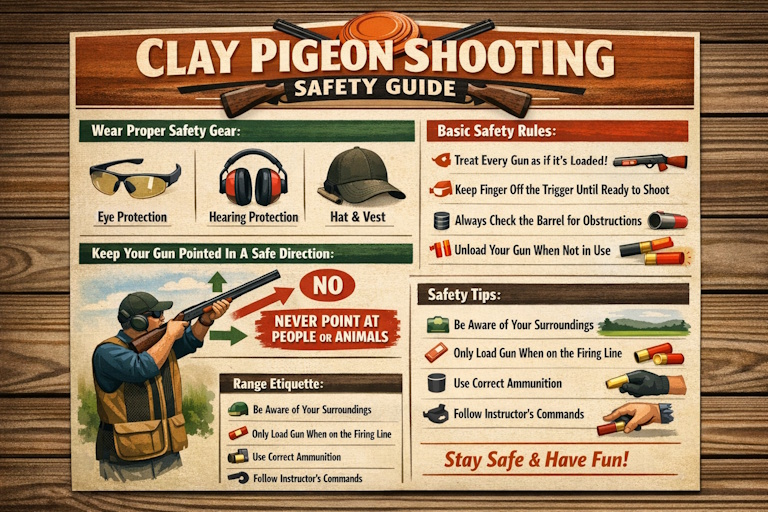
These rules apply in all circumstances, whether on a shooting ground, at home, or transporting your gun. They must be committed to memory and applied without exception:
Always treat every shotgun as if it is loaded, regardless of whether you believe it to be empty.
Never point a shotgun at anything you do not intend to shoot. Keep the muzzle pointed in a safe direction at all times.
Keep your finger off the trigger until you are ready to shoot. Rest your finger alongside the trigger guard.
Always positively identify your target and what lies beyond it before taking a shot.
Keep the gun broken (for break-action shotguns) or with the action open when not in use.
Only load your shotgun when you are on the stand or in the shooting position and ready to shoot.
Ensure the barrel is clear of obstructions before loading or shooting. A blocked barrel can cause catastrophic failure.
Never rely solely on a safety catch. Mechanical devices can fail; safe handling practices cannot.
These rules work together as a system of overlapping safety measures. Even if one rule is momentarily forgotten, the others prevent an accident. Never justify breaking one rule because you are following the others.
Safe Handling Procedures
Proper handling procedures are the foundation of shotgun safety. Each action must be deliberate and methodical:
Picking Up a Shotgun
Always break open the gun or check the action is open before picking it up. Visually and physically check the chambers are empty. Keep the muzzle pointed in a safe direction throughout.
Carrying a Shotgun
Carry the gun broken or with the action open. For break-action guns, carry it over your forearm with the barrels pointing down. Never carry a loaded gun off the shooting stand.
Passing a Shotgun to Another Person
Break open the gun, remove cartridges, and visually show the chambers are empty. Pass the gun with the action open and the muzzle pointing safely away from both parties.
Loading
Only load when on the stand and instructed to do so. Keep the muzzle pointed down range. Load the cartridges carefully, ensuring they are fully seated in the chambers before closing the gun.
After Firing
After shooting, break open the gun immediately. Remove spent cartridges. Keep the gun broken until you are ready to shoot again or have left the stand.
Dealing with Misfires
If a cartridge fails to fire, keep the gun pointed down range and count to 30. This allows time for a potential hang-fire. Break the gun, remove the cartridge, and inform the referee or instructor.
Developing muscle memory: Repeating correct handling procedures until they become automatic is crucial. Consistent, safe habits prevent dangerous mistakes under pressure or when fatigued.
Ammunition Safety
Correct Cartridge Selection
Always use cartridges that match the chamber length marked on your gun. Standard chamber lengths are 2½" (65mm), 2¾" (70mm), and 3" (76mm). Using cartridges longer than the chamber length is extremely dangerous and can cause barrel failure. Check the proof marks on your gun's barrels to confirm maximum cartridge length and pressure ratings.
Cartridge Condition
Inspect cartridges before use. Discard any that show signs of corrosion, dents, splits, or water damage. Damaged cartridges can cause misfires or dangerous pressure spikes. Store cartridges in a dry environment and rotate stock to use older ammunition first.
Loading Discipline
Only load the number of cartridges you intend to fire immediately. For sporting clays, this is typically one or two. Do not "top up" the gun with additional cartridges between shots. Remove all cartridges before leaving the stand or taking a break.
Storage Requirements
Secure storage is a legal requirement under the Firearms Act 1968 and a condition of holding a shotgun certificate. Your local police firearms licensing department will inspect your storage arrangements before granting a certificate.
Gun Cabinet Requirements
- Must be constructed of steel or have steel lining of at least 1.5mm thickness
- Must be secured to a wall or floor with coach bolts
- Must have a secure locking mechanism (5-lever lock or equivalent)
- Should be located in a secure, private part of the home (not visible from outside)
- Keys must be kept separate and secure from the cabinet
Ammunition Storage
- Cartridges may be stored in the gun cabinet or in a separate secure container
- Must be kept separate from firearms (different compartment or locked container)
- Keep cartridges in a cool, dry environment away from sources of heat
- Check cartridges regularly for signs of corrosion or damage
- Follow manufacturer guidance on shelf life and storage conditions
Police home visits: Your local firearms officer will inspect your storage before granting or renewing your certificate. The cabinet must be fitted before the visit, and you should be able to demonstrate it is secure and suitable.
Transporting Your Shotgun
Transporting shotguns safely and legally is the responsibility of the certificate holder. Follow these guidelines at all times:
Guns must be carried in a secure gun slip or case when transporting.
Break the gun and ensure it is unloaded before placing it in the slip.
Guns should be out of sight when in a vehicle, ideally locked in the boot.
Ammunition must be stored separately from firearms during transport.
Never leave guns unattended in an unoccupied vehicle.
If stopping during a journey, take reasonable precautions to secure the vehicle.
When traveling to or from a shooting ground, you may only make reasonable stops (fuel, comfort breaks).
The shotgun certificate must be carried with you when transporting guns.
Traveling abroad: If taking a shotgun outside the UK, you will need additional documentation. Contact your local police firearms department well in advance for guidance on temporary export licenses and customs requirements.
Safety on the Shooting Ground
Shooting grounds maintain strict safety protocols. Understanding and following range rules ensures a safe experience for everyone:
Always follow the instructions of the referee, instructor, or range officer without question.
Wear appropriate eye and ear protection at all times on the shooting ground.
Never handle a gun when people are forward of the firing line or in the range area.
Keep the gun broken and empty when moving between stands.
Only close the gun when on the stand, facing down range, and ready to call for a target.
If you drop a cartridge, leave the gun open and pointed safely, then retrieve it.
Be aware of others around you. Never swing a gun where the muzzle could cover another person.
Do not consume alcohol or drugs before or during shooting. Even small amounts impair judgment and reaction time.
Speaking up: If you observe unsafe behavior or feel uncomfortable with any aspect of shooting arrangements, speak to the ground staff immediately. Good shooting grounds welcome feedback and take safety concerns seriously.
Maintenance & Inspection
Regular Cleaning
Clean your shotgun after every use. Residue from cartridges is corrosive and will damage barrels if left uncleaned. Use proper cleaning rods, brushes, and solvents. Always check the barrel is clear before cleaning and ensure the gun is completely unloaded.
Pre-Shooting Inspection
Before every shooting session, visually inspect the barrels for obstructions. Check the action operates smoothly. Examine the stock for cracks or damage. Ensure all screws and fasteners are tight. Look for signs of wear on the firing pins and extractors.
Professional Servicing
Have your shotgun professionally serviced annually or after approximately 5,000-10,000 rounds. A qualified gunsmith will check for wear, test the proof status, and identify potential issues before they become dangerous. Keep records of all servicing.
Legal Responsibilities
Holding a shotgun certificate in the UK comes with significant legal obligations under the Firearms Act 1968 and subsequent amendments. Failure to comply can result in certificate revocation, prosecution, and imprisonment.
Certificate Conditions
Your shotgun certificate specifies conditions you must follow, including storage requirements, notification of address changes, and provisions for lending guns. Read and understand all conditions attached to your certificate.
Notification Requirements
You must notify your local firearms licensing department within seven days of: acquiring a new shotgun, disposing of a shotgun, changing your address, or any change in circumstances that might affect your suitability to hold a certificate (certain criminal convictions, mental health issues).
Access by Others
You are responsible for ensuring no unauthorized person has access to your shotguns. This includes family members and visitors to your home. Never allow anyone without a valid shotgun certificate to have unsupervised access to your guns.
Reporting Theft or Loss
If your shotgun is stolen or lost, you must report it immediately to the police and to your firearms licensing department. Failure to report is a criminal offense.
Safety Equipment
Eye Protection
Shooting glasses protect against ejected cartridge cases, clay fragments, and ricochets. They should be impact-rated to appropriate standards (ANSI Z87.1 or equivalent).
Prescription glasses are not sufficient -- use over-glasses or prescription shooting glasses. Tinted lenses improve target visibility in various light conditions but must still meet safety standards.
Hearing Protection
Shotgun noise levels (140+ decibels) cause permanent, cumulative hearing damage. Passive ear defenders (muffs) provide 20-30 dB reduction. Electronic ear defenders allow normal conversation while cutting out harmful gunshot noise.
For maximum protection, use foam ear plugs under ear defenders. There is no such thing as too much hearing protection when shooting.
Never shoot without eye and ear protection. Even a single shot without protection can cause permanent damage. No target or score is worth risking your sight or hearing.
Emergency Procedures
Gun Malfunction
If your gun malfunctions, keep it pointed in a safe direction, keep your finger off the trigger, and inform an instructor or range officer immediately. Do not attempt field repairs. A qualified gunsmith must inspect the gun before it is used again.
Accident or Injury
In the event of any shooting accident or injury, cease all shooting immediately, make the area safe, and summon first aid or emergency services. Do not move an injured person unless they are in immediate danger. Preserve the scene and notify the ground owner and police as required.
Unsafe Behavior
If you witness unsafe behavior, speak up immediately. Alert the referee, instructor, or ground staff. If the behavior continues or you feel unsafe, remove yourself from the situation. Your safety is paramount.